The Foundation plays an important role in raising public awareness of science. For 30 years, it has sponsored the Wright Colloquia for Science, held every two years, and supports innovative programs for the active discovery of interdisciplinary scientific research.
Quick Navigation
INSTITUTIONAL SCIENTIFIC INITIATIVES
While the Foundation does not directly fund scientific research, we provide financial support to research institutions, public and private organizations, and individuals for the development of programs in line with our mission – initiatives that inform, entertain and educate the public. Some recent institutional projects supported by the Foundation are illustrated and described below.
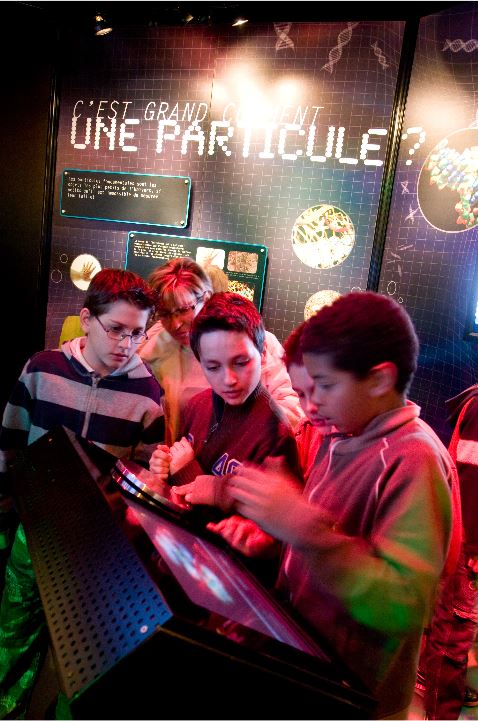
PhysiScope
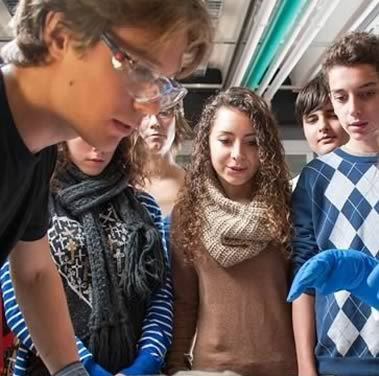
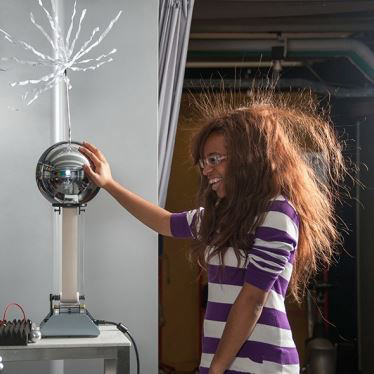
PhysiScope, a permanent and innovative exhibition in the form of a theater-laboratory at the Physics Institute of the University of Geneva, designed to introduce children and teenagers to the excitement of scientific research through hands-on discovery of fundamental principles of physics and current scientific challenges.
PlanetSolar DeepWater
Climate study to measure air and water conditions along the Gulf Stream in the Atlantic, from Florida to New York (2012), as part of the “PlanetSolar DeepWater” scientific exploration led by the University of Geneva aboard the solar catamaran MS Tûranor PlanetSolar.
Genome – Journey to the Heart of Life
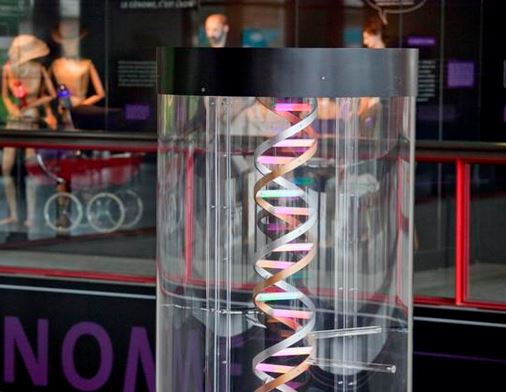
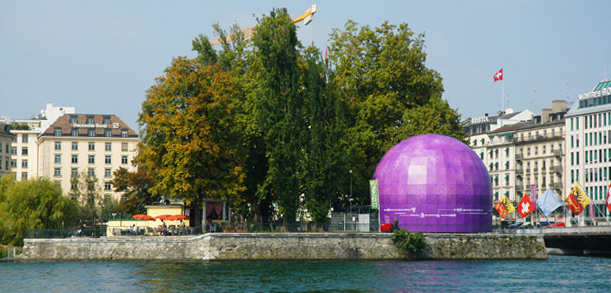
Temporary exhibition “Genome – Journey to the Heart of Life” (October 2009 to February 2010) to commemorate the 450th anniversary of the University of Geneva. Staged in a bright purple dome (14 meters in diameter) with breathtaking images projected in 360° giving the impression of being inside a cell nucleus. This creative approach to explaining science attracted more than 127,000 visitors.
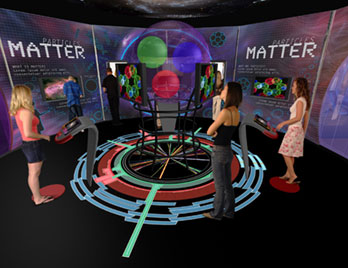
First Matter
“First Matter”, CERN’s unique traveling exhibition designed “for the young and the young at heart”, explores the origin of our Universe, the particles we are made of, and the power of fundamental science to change the world as we know it.
Science on Stage
The Science on Stage Festival | Copenhagen 2011, a hands-on training event for science teachers, attracted over 300 educators from 23 countries.
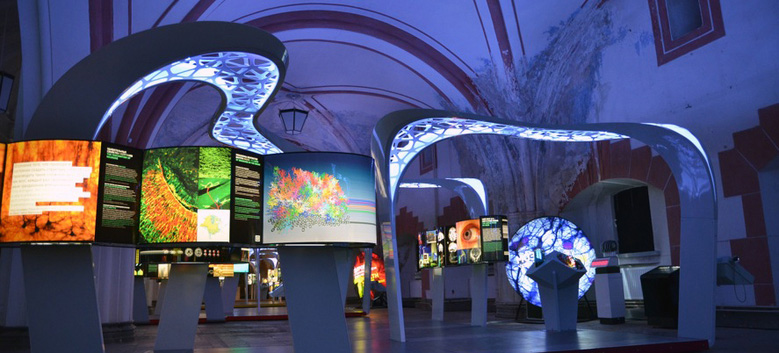
Tunnel of Science
The Tunnel of Science, an interactive traveling experience of fundamental science created by the Max Planck Society, has welcomed more than 9 million visitors worldwide since its first edition in 2000 at EXPO 2000 in Hanover, Germany.

THE WRIGHT COLLOQUIA FOR SCIENCE
The Wright Colloquia for Science are the Foundation’s flagship program. Organized every two years in Geneva since 1984 and accessible to all free of charge, the Colloquia were established by Dr. H. Dudley Wright as a mark of gratitude to the citizens of Geneva, his adopted city. Organized by the University of Geneva and entirely funded by the H. Dudley Wright Foundation, each colloquium consists of a series of evening seminars organized around an interdisciplinary scientific theme chosen by the Foundation’s Board of Directors, under the advice of its Scientific Committee. The themes of previous colloquia have addressed both the discovery of things on an infinitesimal scale and questions of universal scope.
A leading scientific event in French-speaking Switzerland, the Wright Colloquia for Science attract the world’s most eminent scientists to present cutting-edge research to an educated and interested public, but not necessarily trained in science. This unique learning opportunity – including personalized sessions created specifically for young people to encourage them to discover career opportunities in fundamental science – opens a public debate on the latest discoveries, fascinating ideas, fundamental questions and amazing innovations in the world of interdisciplinary science and technology.
Discover all the fascinating themes of the Wright Colloquia since 1984: from “DECODING THE BOOK OF LIFE – The genomic revolution” (2016) to the most fascinating questions in science.
SMALL GRANTS AND PROJECT STARTUP FUNDING
In addition, the Foundation provides grants to individuals and small institutions directly involved in teaching science at primary and secondary school levels, for the development of innovative methods of teaching fundamental science in the classroom and in the field. For more information, please contact the Foundation.