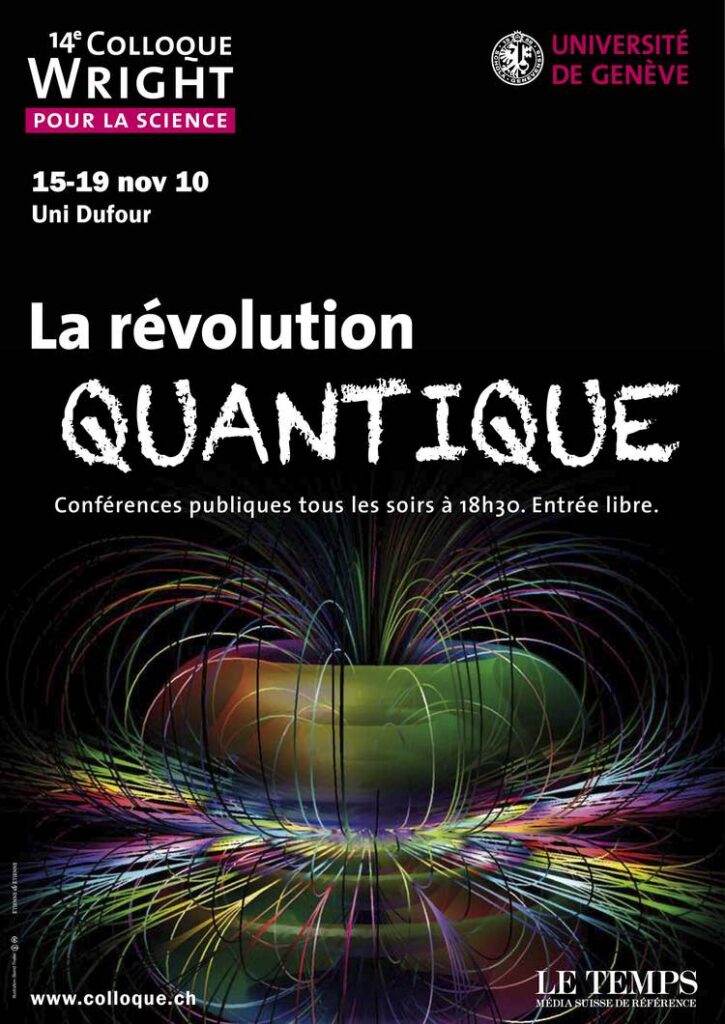
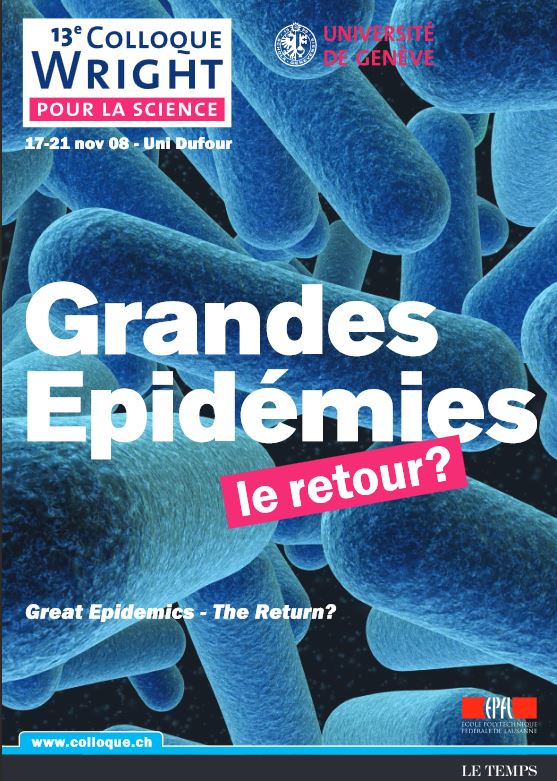
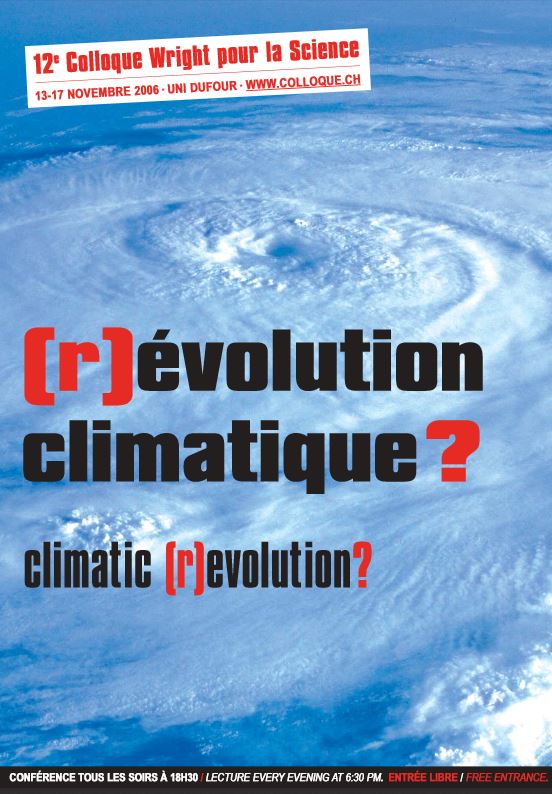
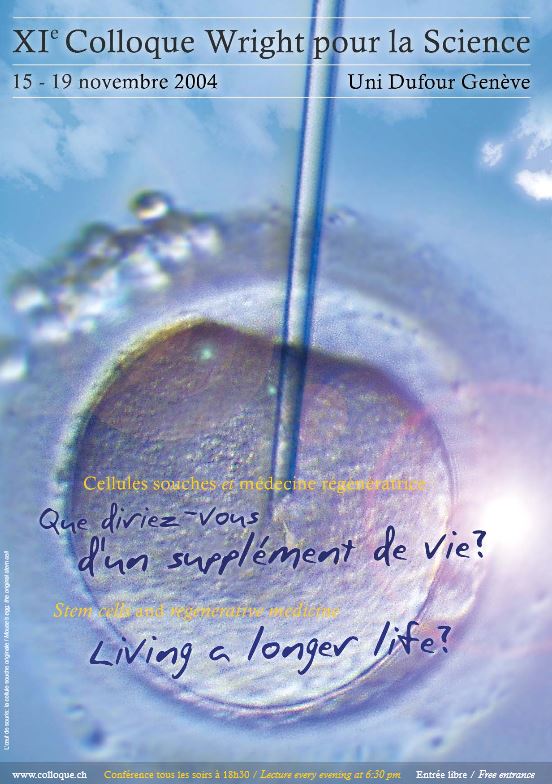
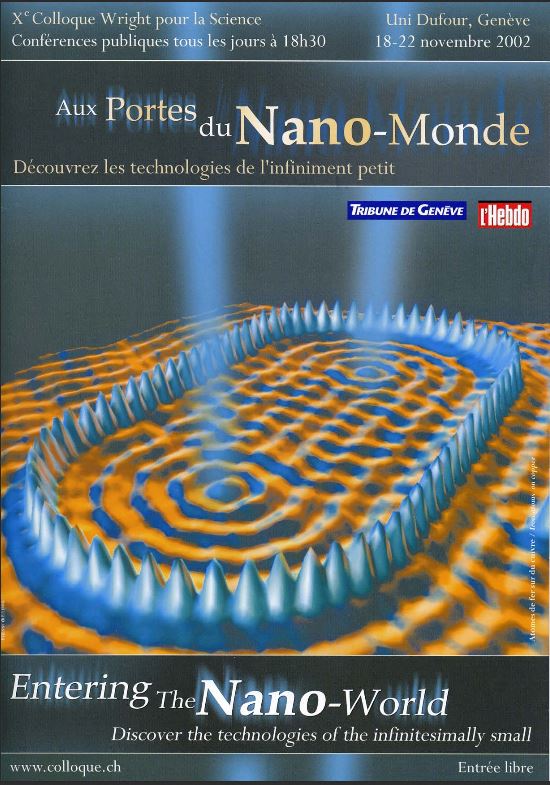
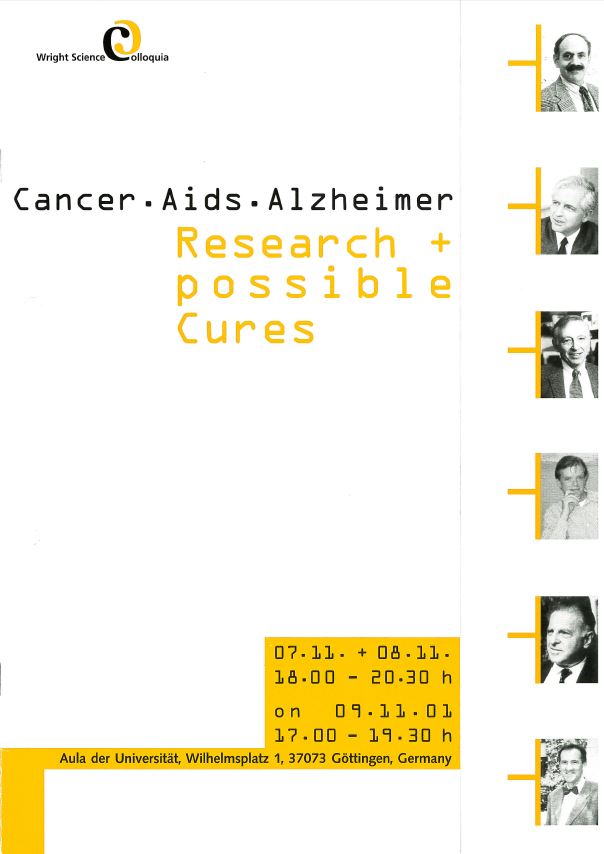
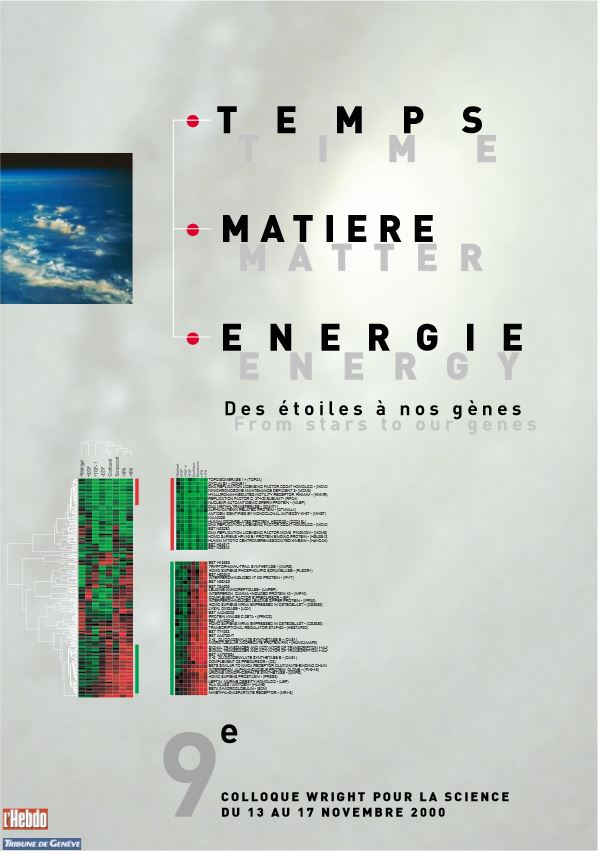
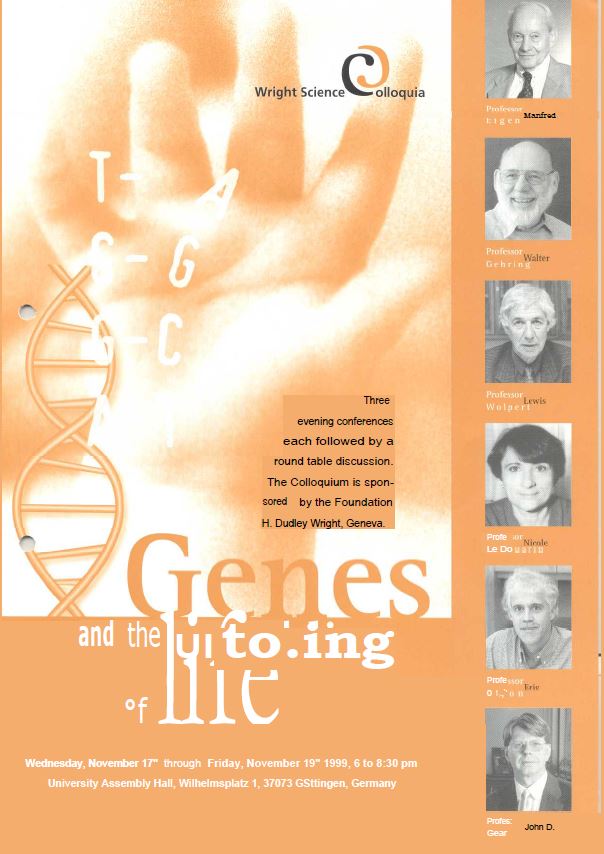
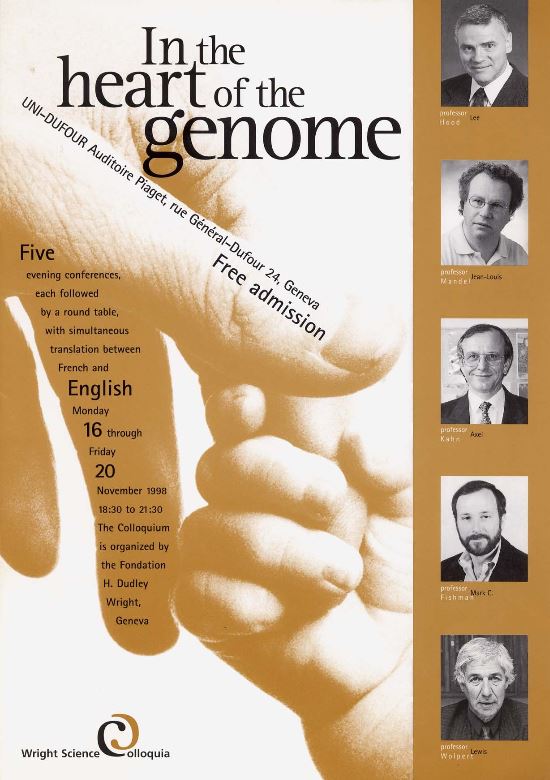
The Foundation plays an important role in raising public awareness of science. For 30 years, it has sponsored the Wright Colloquia for Science, organized every two years, and supports innovative programs for active discovery of interdisciplinary scientific research.
THE WRIGHT COLLOQUIA FOR SCIENCE
The Wright Colloquia for Science are the Foundation’s flagship program. Organized every two years in Geneva since 1984 and accessible to all free of charge, the Colloquia were established by Dr H. Dudley Wright as a mark of gratitude to the citizens of Geneva, his adopted city. Organized by the University of Geneva and entirely funded by the H. Dudley Wright Foundation, each colloquium consists of a series of evening seminars centered around an interdisciplinary scientific theme chosen by the Foundation’s Board of Directors, under the advice of its Scientific Committee.
A leading scientific event in French-speaking Switzerland, the Wright Colloquia for Science attract the most eminent scientists from around the world to present cutting-edge research to an educated and interested audience, but not necessarily trained in science. This unique learning opportunity – including personalized sessions created especially for young people to encourage them to discover the career opportunities offered by basic science – opens a public debate on the latest discoveries, fascinating ideas, fundamental questions and amazing innovations in the world of interdisciplinary science and technology.
Last 3 Wright Colloquia
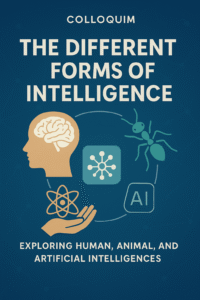
2026 Colloquium “IntelligenceS: Brains, collectives, and machines”
Welcome to this exceptional symposium dedicated to exploring the many forms of intelligence that shape our understanding of the world and influence our lives. Today, we will broaden our vision of what intelligence is, addressing not only human intelligence, but also that of other species and emerging technologies.
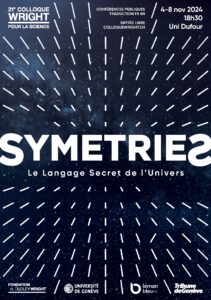
Symmetries – The Secret Language of the Universe (2024)
The 21st Wright Colloquium for Science was held from November 4 to 8, 2024 at the University of Geneva on the theme of symmetries in the Universe. This vast and fundamental concept was explored through five lectures dedicated to the role of symmetries in the history of our Universe, from the Big Bang to living cells and the passage of time.
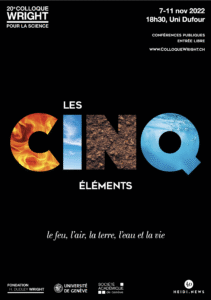
The Five Elements
Already in Greek antiquity, but probably elsewhere and at other times, humans wondered to what extent it was possible to break down objects, natural or not, into their primordial elements. One of these decompositions proposed that earth, water, fire and air were the four elements of which everything is constructed, but a fifth element seemed necessary to complete the picture: life.